Most nutrition education happens without food in the room. We bring the food.
The FareRx Teaching Kitchen is a real working kitchen in Philadelphia — not a conference room, not a slide deck. You come in, you cook with a Registered Dietitian and your neighbors, and you leave with new skills and a bag of groceries to make it again that night.
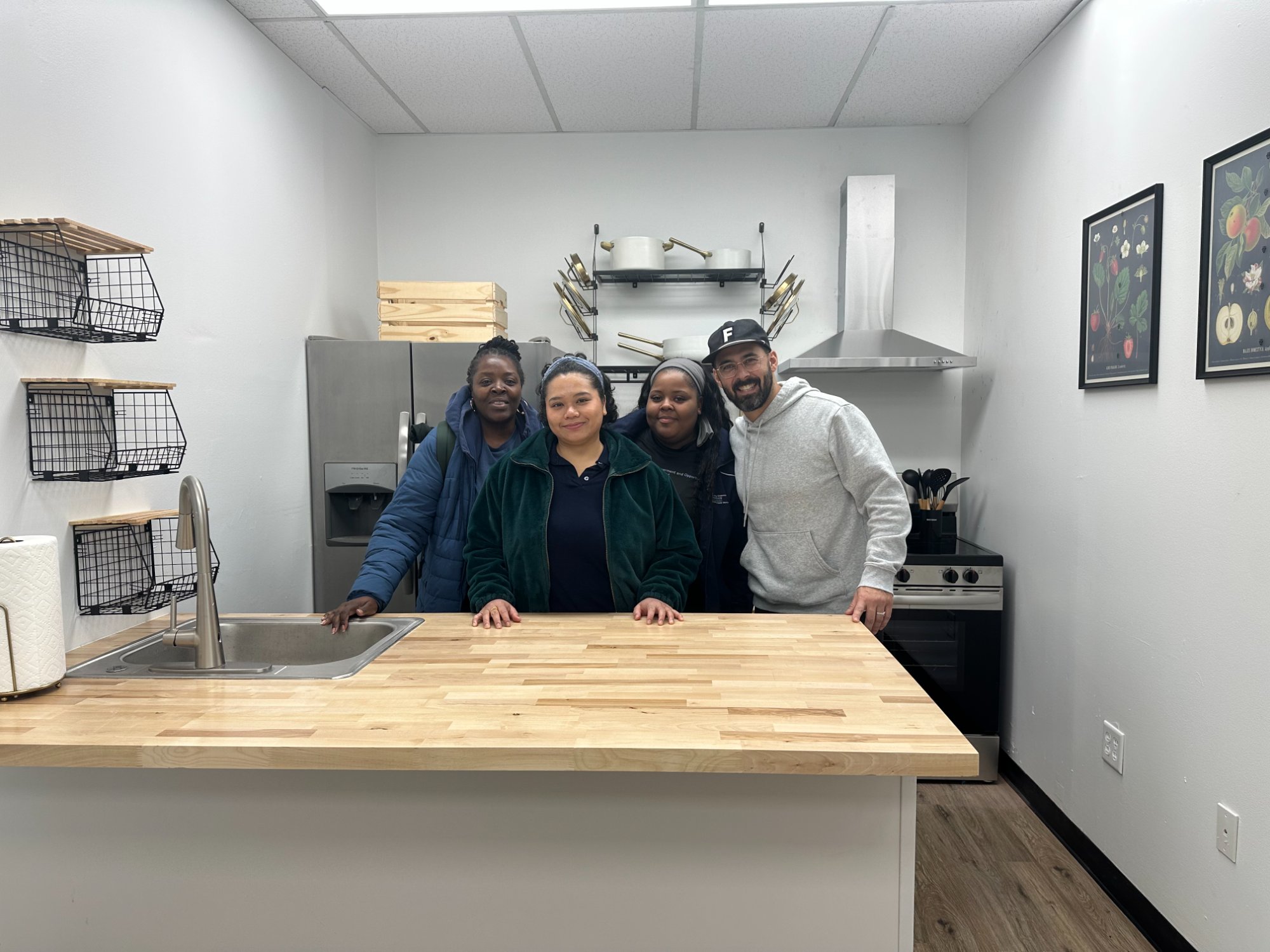
Come hungry. Leave fed.
A typical class is two hours. You're on your feet the whole time. By the end, you've eaten what you made, put the rest in a container to take home, and picked up groceries for the week.
You walk in
Warm front room. Coffee on. Someone greets you by name. You hang up your coat next to your neighbor's.
We get your numbers
Quick check-in with your care team — blood pressure, blood sugar, a new medication question. Five minutes, tops.
We cook, together
Real working kitchen. Ten stations. Your dietitian is at the stove next to you. Everyone's making the same meal, which becomes everyone's meal tonight.
You leave with groceries
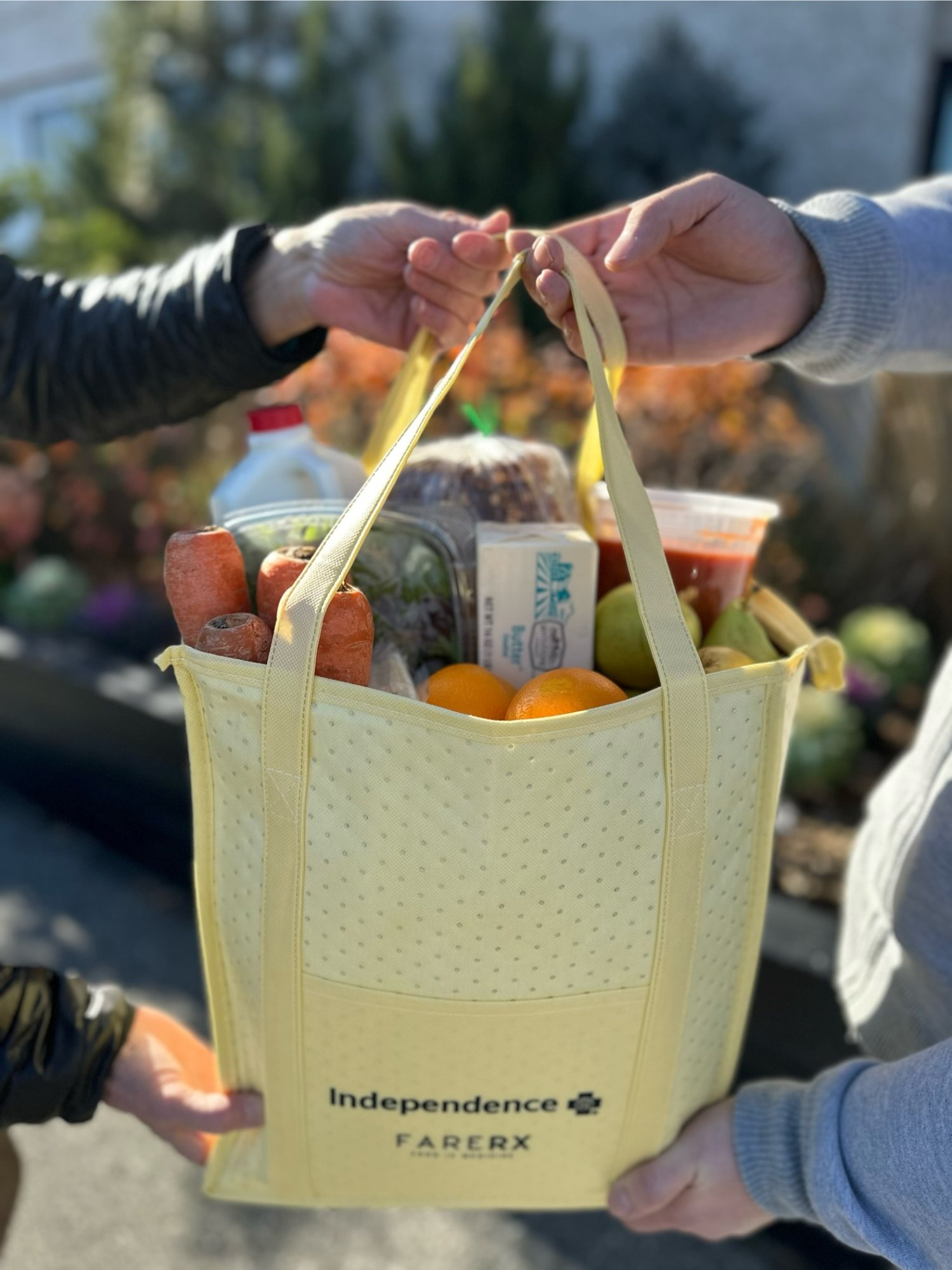
Before you leave, you pick up a bag of fresh groceries packed that morning. The ingredients for tonight's dinner are already in there.
FareRx doesn't feel like a program. It feels like a neighbor doing the work that every city needs done. This is what food is medicine actually looks like on the ground.
Skills that stick, because you learned them at a stove.
Our curriculum is an hands-on diabetes education program — ten hours the first year, then a couple hours each year after. But we teach it at a cutting board, not a lectern.
You won't be handed a workbook. You'll be handed an onion.
- 1Eating for your body and your condition
- 2Moving in ways that actually fit your life
- 3Checking your numbers — and knowing what they mean
- 4Getting along with your medications
- 5Problem-solving the hard days (highs, lows, sick weeks)
- 6Coping with the stress, without shame
- 7Staying on top of screenings and checkups
Numbers your team can actually see.
Eligible members leave the kitchen with connected devices — a blood pressure cuff, a glucose monitor, a scale. Your readings go straight to your care team, who checks in each month. No more showing up to the doctor with a paper log you can't read.
Blood Pressure Cuff
For hypertension and heart disease
Glucose Monitor
For diabetes and prediabetes
Smart Scale
For weight management and heart failure
Pulse Oximeter
For COPD and heart conditions
The recipe in your head. The ingredients in your hands.
Every class ends at the Fulfillment Center — the room where our grocery bags are packed each morning. Before you head home, you grab a bag with everything you need to make tonight's recipe again.
That's the difference between a class and a program. Between a pamphlet and a meal.
Come to the kitchen.
The Teaching Kitchen is in Philadelphia. Open to eligible members of participating health plans and direct enrollees. Classes run mornings, afternoons, and evenings.